Police Dog Bite Claims: State Exemptions, § 1983 and Deadlines
Bitten by a police K-9? State dog bite statutes often exempt police dogs, but a Fourth Amendment claim may remain. Exemptions, immunity and notice deadlines.
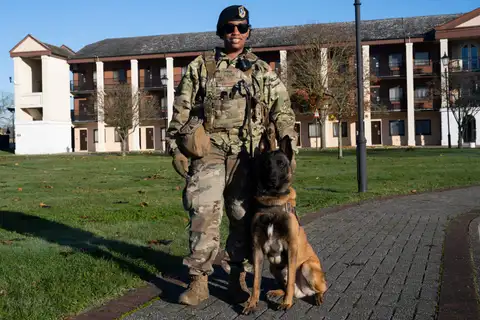
A police dog bite can lead to two different claims: a state-law claim against the agency that owns the dog, and a federal civil rights claim under 42 U.S.C. § 1983 that the bite was excessive force 2. Many state dog bite statutes exempt police dogs, often only toward suspects and only when the agency followed a written policy, so the federal claim is frequently the one that remains 9 1.
Both claims are hard to win, and both have short or unusual deadlines. This guide sets out the state exemptions as written in each statute, how courts judge excessive force, who can be sued, and the notice-of-claim rules that apply when the dog belongs to a government.
Do state dog bite laws cover police dogs?
It depends on the state, and the answer comes in three forms: a written exemption, no exemption, or general government immunity. In 22 jurisdictions a statute makes an owner strictly liable for bites, and in 16 more a statute covers part of the claim. Several of those statutes carve out police dogs.
The most common exemption protects the agency only toward a suspect and only when the agency had rules. California added its exemption to Civil Code § 3342 in 1988. The agency is not liable when its dog bites while defending itself from provocation or helping an officer apprehend a suspect, investigate a crime, serve a warrant or defend a person, but only if the agency has a written policy on dog use, and never toward a bystander who was not involved or suspected 9. Arizona’s § 11-1025 uses nearly the same terms 10. Nebraska added a similar rule to § 54-601 in 2009; the dog must also have been responding to harassment or used with reasonable force 11.
Other states demand more. Since June 12, 2013, South Carolina exempts a police dog only if it acted in direct compliance with a certified handler’s lawful command, was certified to Law Enforcement Training Council standards, the agency had a written canine policy that was followed, the force was not excessive, and the victim was not a third-party bystander 12. Utah requires a certified dog and handler, a written policy the handler followed, and use that was reasonable and careful 13. Idaho protects the state, cities, counties and their officers when the dog is used “reasonably and carefully” to find or arrest a suspect or keep public order 17.
Some exemptions are broader. Colorado’s statute does not apply at all when a peace officer or military personnel used the dog in their duties 16. Wisconsin’s § 174.02 excuses the owner of a law enforcement dog for injuries to a crime suspect while the dog performs law enforcement functions 15. Washington excludes the lawful use of a police dog from its strict-liability statute, and RCW 4.24.410, as amended in 2024, makes a handler who acts in good faith immune from civil suit 14.
Tennessee shows how narrowly courts read these words. Its statute exempts police dogs on duty only as to a person who took part in, or was suspected of, the conduct that brought the dog in. In Greenlee v. Sevier County (2018), the Court of Appeals held that a deputy bitten while lawfully at the scene was not barred 18.
States with no police-dog exemption
A few strict-liability statutes say nothing about police dogs. Illinois is the clearest example. In Wilson v. City of Decatur (2009), the Appellate Court held a city that owned a police dog liable under the Animal Control Act, and the Tort Immunity Act did not shield it 19. The one-year deadline for suits against local governments still applied 20.
Florida’s § 767.04 has no police-dog exception 30. A claim against a city, county or state agency must still follow the notice rules and damage caps of § 768.28 22. Massachusetts’s statute has no exemption either, and a separate section requires the state, city or town to indemnify an officer sued for damage caused by a dog in the officer’s care as part of official duties 21.
When government immunity blocks the claim
Where the statute is silent, the agency may still be immune. In Tate v. City of Grand Rapids (2003), the Michigan Court of Appeals held that governmental immunity barred a statutory claim against the city for a police dog bite during a governmental function, even though the dog disobeyed its handler 23. In Smith v. Village of Ruidoso (1999), New Mexico’s Court of Appeals held that strict liability cannot be imposed on a government body, but a negligence claim against the village over its police dog could go forward 24.
Pennsylvania goes the other way. Its immunity statute has an exception for animals in a local agency’s custody, which reaches the agency’s own police dog 25. Each state page lists its own rule under defenses: see Michigan, New Mexico and Pennsylvania.
| State | What the statute or court says | Source |
|---|---|---|
| California | Exempt toward suspects if written policy; not bystanders | 9 |
| Arizona | Same structure as California | 10 |
| Nebraska | Written policy, reasonable force, suspects only (2009) | 11 |
| South Carolina | Six conditions, never a bystander (2013) | 12 |
| Utah | Certified dog and handler, written policy | 13 |
| Washington | Lawful use excluded; good-faith handler immune | 14 |
| Wisconsin | No statutory liability toward a crime suspect | 15 |
| Colorado | Statute does not apply to dogs used by peace officers | 16 |
| Idaho | Immune when used “reasonably and carefully” | 17 |
| Tennessee | Exempt only toward participants or suspects | 18 |
| Illinois | No exemption; city held liable | 19 |
| Florida | No exemption; § 768.28 notice and caps | 30 22 |
| Michigan | City immune during a governmental function | 23 |
| New Mexico | No strict liability against government; negligence possible | 24 |
States not listed handle police dogs in their dangerous-dog laws, their tort claims acts, or not at all; the state index links every state page.
The federal claim: excessive force under § 1983
Section 1983 makes every person who, “under color of” state law, deprives someone of a constitutional right “liable to the party injured” 2. A K-9 deployed to stop a suspect is a use of force, and the Supreme Court held in Graham v. Connor (1989) that all claims of excessive force in an arrest, investigatory stop or other seizure are judged under the Fourth Amendment’s “objective reasonableness” standard 1.
Graham lists the factors courts weigh: “the severity of the crime at issue, whether the suspect poses an immediate threat to the safety of the officers or others, and whether he is actively resisting arrest or attempting to evade arrest by flight” 1. Reasonableness is judged “from the perspective of a reasonable officer on the scene, rather than with the 20/20 vision of hindsight” 1. Applied to a dog, those questions turn on facts such as whether a warning was given, how long the dog was allowed to bite, and whether the person had already given up.
The Fourth Amendment protects against unreasonable seizures, so the bitten person usually must have been seized. The Court held in Brower v. County of Inyo (1989) that a seizure happens when the government ends a person’s freedom of movement “through means intentionally applied” 8. A suspect the dog was sent after fits that test. A bystander the dog bites by mistake may not, which is one reason state-law claims matter more for bystanders.
Who can be sued: the officer, the city, or both
The handler can be sued personally, but qualified immunity often decides the case. Officials performing discretionary functions are shielded “insofar as their conduct does not violate clearly established statutory or constitutional rights of which a reasonable person would have known,” the Court held in Harlow v. Fitzgerald (1982) 4. Under Pearson v. Callahan (2009), courts ask whether a right was violated and whether it was clearly established, and they may take those questions in either order 5.
A city or county is not liable just because it employs the handler. Monell (1978) held that “a local government may not be sued under § 1983 for an injury inflicted solely by its employees or agents” 3. The plaintiff must show that a policy or custom caused the injury, such as a training method or a written K-9 policy 3. That is also why state exemptions keyed to a written policy, as in California and South Carolina, push agencies to adopt one 9 12.
Notice of claim and filing deadlines
A state claim against a government usually requires a written notice long before the ordinary deadline. California requires a claim within six months of the bite 26. New York requires a notice of claim within 90 days 27. Texas requires notice within six months, or a shorter period in a city charter, unless the government had actual notice 28. Colorado requires written notice within 182 days, and the requirement is jurisdictional 29. Illinois allows one year to sue a local public entity 20.
The federal claim follows different rules. Section 1983 has no limitation period of its own, so courts borrow the state’s general or residual personal-injury period, the Court held in Owens v. Okure (1989) 6. State notice-of-claim rules do not apply: in Felder v. Casey (1988), the Court held that Wisconsin’s notice statute was pre-empted for a § 1983 suit brought in state court 7. Missing the state notice deadline can end the state claim while the federal one survives.
This table gives each state’s general personal-injury deadline and its rule for children. The notice-of-claim periods for government defendants are on each state page.
| State | Deadline | Statute | If the victim is a child |
|---|---|---|---|
| Alabama | 2 years | Ala. Code § 6-2-38(l) | A child bitten before age 19 has the shorter of three years or the normal period after turning 19, so two years: until the 21st birthday. |
| Alaska | 2 years | AS 09.10.070(a) | A child's two years do not begin until age 18. |
| Arizona | 1 year | A.R.S. § 12-541(5); § 12-542 | The time a child is under 18 is not counted, so a bitten child has until age 19 for a statutory claim and age 20 for negligence. |
| Arkansas | 3 years | Ark. Code Ann. § 16-56-105 | Section 16-56-116 gives a person injured before full age three years after reaching it. |
| California | 2 years | Cal. Code Civ. Proc. § 335.1 | For a bitten child, the time before age 18 is not counted, so the two years run from the 18th birthday. |
| Colorado | 2 years | C.R.S. § 13-80-102(1)(a) | A child under 18 with no court-appointed guardian or conservator has until the later of the normal two years or two years after turning 18. |
| Connecticut | 3 years | Conn. Gen. Stat. § 52-577 | Connecticut has no general tolling for minors: the annotations to § 52-584 note it "provides no exceptions for minors". |
| Delaware | 2 years | 10 Del. C. § 8119 | Delaware's savings rule for minors, § 8116, applies only to actions under §§ 8101–8115, and the personal-injury section is § 8119. |
| District of Columbia | 3 years | D.C. Code § 12-301(8) | If the bitten person was under 18 when the claim arose, the clock does not start until their 18th birthday, so the three-year period runs to age 21; § 12-302 sets no shorter cap. |
| Florida | 2 years | Fla. Stat. § 95.11(5)(a); § 95.11(3)(e) | Florida does not pause the deadline for a child who has a parent or guardian. |
| Georgia | 2 years | O.C.G.A. § 9-3-33 | A child bitten before turning 18 has the same two years after the 18th birthday, so until age 20. |
| Hawaii | 2 years | Haw. Rev. Stat. § 657-7 | If the bitten person was under 18, HRS § 657-13 lets them sue any time before 18 and within two years after turning 18, so until their 20th birthday. |
| Idaho | 2 years | Idaho Code § 5-219(4) | The two years do not run while the injured person is under 18. |
| Illinois | 2 years | 735 ILCS 5/13-202 | If the bitten person was under 18, the 2 years start on their 18th birthday, so the suit can be filed until age 20. |
| Indiana | 2 years | IC 34-11-2-4 | A person under a legal disability when the claim accrues has two years after the disability ends to sue. |
| Iowa | 2 years | Iowa Code § 614.1(2) | The deadline is extended for a minor so that the child has one year after reaching majority, which is age 18 in Iowa, to sue; in practice until the 19th birthday. |
| Kansas | 2 years | K.S.A. 60-513(a)(4) | A child bitten before 18 may sue within one year after turning 18, but no claim may be filed more than eight years after the bite. |
| Kentucky | 1 year | Ky. Rev. Stat. § 413.140(1)(a) | For a child, the one year runs from the 18th birthday, so a bitten child has until age 19. |
| Louisiana | 2 years | La. Civ. Code art. 3493.1 | Prescription runs against minors unless a law makes an exception, and article 3493.1 makes one only for product liability claims, so a parent must file a bitten child's claim within the same two years. |
| Maine | 6 years | 14 M.R.S. § 752 | If the injured person is a minor, the six years run from the day they turn 18. |
| Maryland | 3 years | Md. Code, Cts. & Jud. Proc. § 5-101 | When a child is bitten, § 5-201 lets the child file within three years after the disability of minority ends, so in most cases until the 21st birthday. |
| Massachusetts | 3 years | Mass. Gen. Laws ch. 260, § 2A | If the injured person is a minor, the three years run from the day the disability ends, that is, from the 18th birthday, so suit can be brought until age 21. |
| Michigan | 3 years | MCL 600.5805(2) | A child bitten before 18 has one year after turning 18 to sue, even if the three-year period has run. |
| Minnesota | 6 years | Minn. Stat. § 541.05, subd. 1 | A child's period is suspended while the child is under 18, but the extension cannot run more than one year after the 18th birthday. |
| Mississippi | 3 years | Miss. Code Ann. § 15-1-49 | Mississippi defines a minor as a person under 21. |
| Missouri | 5 years | RSMo § 516.120(4) | If the bitten person was under 21 when bitten, the five years run from the 21st birthday, so a suit can be filed until age 26. |
| Montana | 3 years | Mont. Code Ann. § 27-2-204(1) | If the bitten person is under 18 when the claim arises, the time of minority is not counted, so the 3 years start at 18 and run to the 21st birthday. |
| Nebraska | 4 years | Neb. Rev. Stat. § 25-207 | The clock does not run while the child is "within the age of twenty years". |
| Nevada | 2 years | NRS 11.190(4)(e) | The time a victim is under 18 does not count, so a bitten child has until two years after their 18th birthday, with no cap in the statute. |
| New Hampshire | 3 years | N.H. Rev. Stat. Ann. § 508:4, I | A child may bring a personal action within two years after the disability of infancy is removed, which in New Hampshire is the 18th birthday, so until age 20. |
| New Jersey | 2 years | N.J.S.A. 2A:14-2(a) | N.J.S.A. 2A:14-21 lets a person injured as a minor sue within two years after turning 18. |
| New Mexico | 3 years | NMSA 1978, § 37-1-8 | Under § 37-1-10 a child has one year after turning 18 to sue. *Gomez v. |
| New York | 3 years | N.Y. CPLR 214(5) | If the bitten person was under 18, CPLR 208(a) extends the time to three years after the 18th birthday, so suit can be filed until the child turns 21; the ten-year outer limit in § 208 does not apply to infancy. |
| North Carolina | 3 years | N.C. Gen. Stat. § 1-52(5), (16) | A child's claim is tolled until age 18, and the child then has the full three years, so until the 21st birthday. |
| North Dakota | 6 years | N.D.C.C. § 28-01-16(5) | Time while the child is under 18 does not count, but the extension cannot run "longer than one year after the disability ceases". |
| Ohio | 2 years | Ohio Rev. Code § 2305.10(A) | If the bitten person was under 18, the two years start on their 18th birthday, so the child has until age 20 to sue. |
| Oklahoma | 2 years | 12 O.S. § 95(A)(3) | A person under a legal disability when the claim accrues may sue within one year after the disability is removed, so a bitten child generally has until one year after turning 18. |
| Oregon | 2 years | ORS 12.110(1) | The two years are tolled while the child is under 18, but the extension may not exceed five years or run past one year after the 18th birthday, whichever comes first. |
| Pennsylvania | 2 years | 42 Pa.C.S. § 5524(2) | If the child was an unemancipated minor when bitten, time before the 18th birthday does not count. |
| Rhode Island | 3 years | R.I. Gen. Laws § 9-1-14(b) | If the bitten person was under 18, the three years run from the 18th birthday, so the suit can be filed until age 21. |
| South Carolina | 3 years | S.C. Code Ann. § 15-3-530(5) | Time while the child is under 18 is not counted, but the deadline cannot be extended to more than one year after the 18th birthday, so a child has until the later of three years after the bite or age 19. |
| South Dakota | 3 years | SDCL 15-2-14(3) | The time a child is under 18 does not count, but the extension cannot run "longer than one year after the disability ceases". |
| Tennessee | 1 year | Tenn. Code Ann. §§ 28-3-104, 44-8-413(d) | For a child under 18 at the time of the bite, § 28-1-106 stops the clock until the 18th birthday, so the child then has one year to sue. *Tate v. |
| Texas | 2 years | Tex. Civ. Prac. & Rem. Code § 16.003 | The time a child is under 18 is not counted, and the statute sets no outer cap, so a bitten child has until their 20th birthday to sue. |
| Utah | 3 years | Utah Code §§ 78B-2-305(1)(a)(iv), 78B-2-307(4) | The limitations period does not run while the injured person is under 18, so a bitten child's own claim can be filed after the child turns 18. |
| Vermont | 3 years | 12 V.S.A. § 512(4) | If the bitten person is a minor when the claim accrues, the three years run from when the disability ends. |
| Virginia | 2 years | Va. Code § 8.01-243(A) | A child's claim does not start running until the child turns 18; the child then has the normal two years, so suit must be filed before the 20th birthday. |
| Washington | 3 years | RCW 4.16.080(2) | Time while the injured person is under 18 does not count, so a bitten child has until three years after their 18th birthday. |
| West Virginia | 2 years | W. Va. Code § 55-2-12(b) | If the bitten person is a minor, the two years start on their 18th birthday, but no suit can be filed more than 20 years after the bite. |
| Wisconsin | 3 years | Wis. Stat. § 893.54(1m)(a) | A child under 18 when bitten may sue within two years after turning 18, and this never shortens the regular three-year period, so the deadline is the later of three years from the bite or the 20th birthday. |
| Wyoming | 4 years | W.S. 1-3-105(a)(iv)(C) | A child bitten before 18 may sue within three years after turning 18, or within the normal four years if that is later. |
The statute of limitations guide explains when the clock starts and how it runs for minors.
After a police dog bite
- Get medical care. See a doctor for any bite that breaks the skin. Ask the agency for the dog’s rabies vaccination record; what to do after a dog bite covers the CDC first-aid steps.
- Write down the facts. Note whether a warning was given, how long the bite lasted, what commands you heard, and who saw it. These are the facts Graham turns on 1.
- Request the records. The incident report, use-of-force report and the agency’s written K-9 policy all bear on the state exemptions and the Monell question 3 9.
- Calendar the notice deadline. The government notice period is often the shortest deadline in the case 26 27 28.
For the rules on ordinary dogs, see dog bite laws by state and strict liability dog bite states. The claim checker applies each state’s dog bite rule, but it does not decide constitutional claims. If an officer was bitten on the job, dog bite at work covers workers’ compensation.
Questions
Can I sue if a police dog bit me during an arrest?
You can file a federal claim under 42 U.S.C. § 1983 if the bite was excessive force, judged by what a reasonable officer on the scene would have done21. Whether a state-law claim survives depends on the state: California, Arizona, Nebraska and Utah exempt agencies that follow a written dog policy, while Illinois has no exemption at all910111319.
What if a police dog bit me and I was not a suspect?
Several exemptions protect the agency only against suspects or participants. California and Arizona's exemptions do not reach a bystander who was not involved or suspected, and South Carolina's never covers a third-party bystander91012. Tennessee's applies only to a person who took part in, or was suspected of, the conduct that brought the dog in18.
Is a police officer personally liable for a K-9 bite?
Sometimes. Under § 1983 an officer can be sued personally, but qualified immunity applies unless the officer violated a clearly established right45. Some states also protect handlers under state law: Washington immunizes a handler who uses a police dog in good faith, and Massachusetts makes the employer indemnify an officer sued over a police dog in their care1421.
How long do I have to file a claim for a police dog bite?
Two clocks may run. A state claim against a city or county usually needs a written notice first, for example within six months in California and Texas or 90 days in New York262827. A § 1983 claim uses the state's general personal-injury limitation period, and state notice-of-claim rules do not apply to it67.
Sources
- Graham v. Connor, 490 U.S. 386 (1989), Legal Information Institute, Cornell Law School. Checked 17 October 2026.
- 42 U.S.C. § 1983 (civil action for deprivation of rights), Legal Information Institute, Cornell Law School. Checked 17 October 2026.
- Monell v. Department of Social Services, 436 U.S. 658 (1978), Legal Information Institute, Cornell Law School. Checked 17 October 2026.
- Harlow v. Fitzgerald, 457 U.S. 800 (1982), Legal Information Institute, Cornell Law School. Checked 17 October 2026.
- Pearson v. Callahan, 555 U.S. 223 (2009), Legal Information Institute, Cornell Law School. Checked 17 October 2026.
- Owens v. Okure, 488 U.S. 235 (1989), Legal Information Institute, Cornell Law School. Checked 17 October 2026.
- Felder v. Casey, 487 U.S. 131 (1988), Legal Information Institute, Cornell Law School. Checked 17 October 2026.
- Brower v. County of Inyo, 489 U.S. 593 (1989), Legal Information Institute, Cornell Law School. Checked 17 October 2026.
- California Civil Code § 3342, California Legislative Information. Checked 17 October 2026.
- A.R.S. § 11-1025, Liability for dog bites, Arizona State Legislature. Checked 17 October 2026.
- Neb. Rev. Stat. § 54-601 (dog owner liable for damages), Nebraska Legislature. Checked 17 October 2026.
- S.C. Code Title 47, Chapter 3 (Animals: §§ 47-3-20, -50, -110, -710 to -770), South Carolina Legislature. Checked 17 October 2026.
- Utah Code § 18-1-1, Liability and damages for dog injury -- Exceptions, Utah Legislature. Checked 17 October 2026.
- RCW 4.24.410 Police dogs — Immunity, Washington State Legislature. Checked 17 October 2026.
- Wisconsin Statutes § 174.02, Owner's liability for damage caused by dog, Wisconsin State Legislature. Checked 17 October 2026.
- C.R.S. § 13-21-124, Civil actions against dog owners, Colorado Revised Statutes (public.law copy of the official text). Checked 17 October 2026.
- Idaho Code § 25-2808, Dogs used in law enforcement, Idaho Legislature. Checked 17 October 2026.
- Greenlee v. Sevier County, No. E2017-00942-COA-R3-CV (Tenn. Ct. App. Apr. 26, 2018), Court of Appeals of Tennessee (via CourtListener). Checked 17 October 2026.
- Wilson v. City of Decatur, 389 Ill. App. 3d 555 (2009), Illinois Appellate Court, Fourth District (via CourtListener). Checked 17 October 2026.
- 745 ILCS 10/8-101 (Tort Immunity Act limitation), Illinois General Assembly. Checked 17 October 2026.
- Massachusetts General Laws ch. 140, § 155A (indemnification of officers for police dogs), Massachusetts Legislature. Checked 17 October 2026.
- Florida Statutes § 768.28, Waiver of sovereign immunity in tort actions, The Florida Legislature. Checked 17 October 2026.
- Tate v. City of Grand Rapids, 256 Mich. App. 656, 671 N.W.2d 84 (2003), Michigan Court of Appeals (via CourtListener). Checked 17 October 2026.
- Smith v. Village of Ruidoso, 1999-NMCA-151, 128 N.M. 470, 994 P.2d 50, New Mexico Court of Appeals (NMOneSource). Checked 17 October 2026.
- 42 Pa.C.S. § 8542 (exceptions to governmental immunity), Pennsylvania General Assembly. Checked 17 October 2026.
- California Government Code § 911.2, California Legislative Information. Checked 17 October 2026.
- N.Y. General Municipal Law § 50-e, New York State Senate. Checked 17 October 2026.
- Texas Civil Practice and Remedies Code ch. 101 (Tort Claims Act), § 101.101, Texas Legislature. Checked 17 October 2026.
- C.R.S. § 24-10-109, Colorado Governmental Immunity Act: notice required, Colorado Revised Statutes (public.law copy). Checked 17 October 2026.
- Florida Statutes § 767.04, Dog owner's liability for damages to persons bitten, The Florida Legislature. Checked 17 October 2026.